
Cancer Genomic Profiling
Cancer molecular profiling to guide precision therapy.
This test analyzes the molecular profile of cancer to support discussions about treatment options with the oncology team.
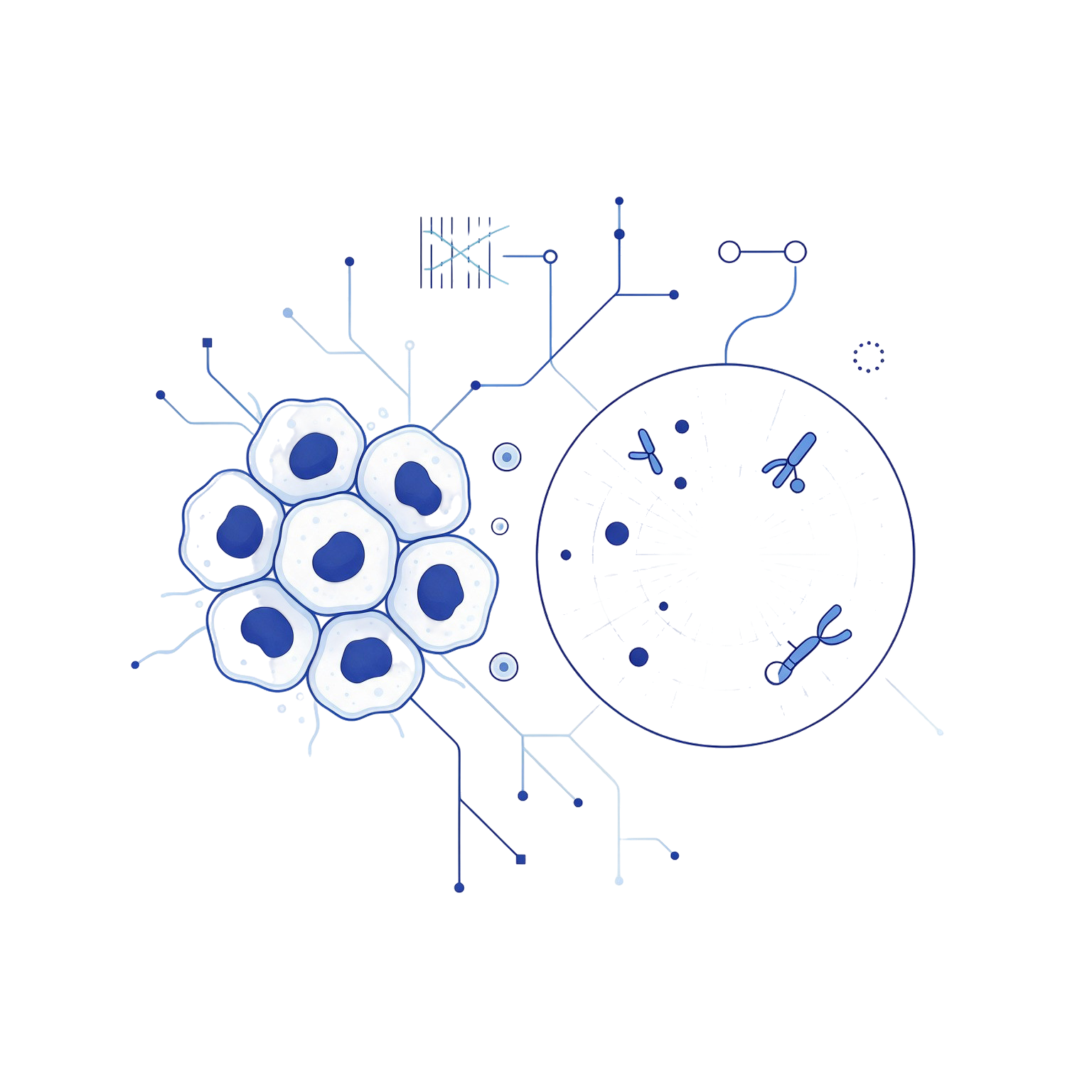
Why Is Cancer Comprehensive Genomic Profiling Important?
Each tumor has a different molecular profile. Molecular profiling helps:
Identify genetic mutations associated with the tumor
Provide molecular information that may support oncology discussions about treatment options
Who Should Consider Cancer Genomic Profiling?
Testing may be considered especially for:
Patients with Solid Tumors
Patients who need more comprehensive molecular information to support precision treatment choices.
Cancer Patients at Various Stages
Patients with cancer at an early stage, stages III–IV, or with progressive, relapsed, or treatment-resistant disease.
Patients Seeking Molecular Information
Discuss with an oncology team whether profiling may be appropriate for your situation.
Why Choose Cancer Genomic Profiling?
Panel Options
Panel contents and sample options vary by product. Contact our team to confirm current options.
Molecular Profiling
Results may support discussions with your oncology team; they do not guarantee an actionable target or treatment benefit.
Cancer Genomic Profiling Panel Options
Panels Based on Clinical Needs
Test panel options are tailored to patients’ clinical needs. Contact our team for information about available panels and recommendations suited to your condition.
Discuss Your NeedsHow Is Cancer Genomic Profiling Performed?
Consultation
Discuss the cancer condition and testing needs with a doctor based on cancer type, stage, the patient’s condition, and the purpose of testing.
Sample Collection
Sample options vary by panel and may include tumor tissue or peripheral blood. Confirm suitable sample type with our team.
NGS Analysis
The sample is analyzed using next-generation sequencing.
Results Discussion
Results may support oncology discussions about care options.